Inside Gem Jam: The Party Game That Takes Players On A Blast To The Past

A creation born from the need for a creative outlet outside the normalcy of daily life, mixed with a touch of nostalgia, we speak to Siang Hui - founder of Gemini Games, as he shares his experiences and stories behind the creation of Gem Jam.

Q. Please give the readers a short introduction about yourself and how you started Gemini Games. What is your “origin” story?
Hello! I am Siang Hui, the creator of Gem Jam. Gemini Games was born from my search for a creative spark outside the daily grind. After realizing my lack of drawing skills made visual arts a dead end, I discovered the world of modern board game mechanics through a video gameplay of “Fantasy Realms.” Coming from an MMORPG background, I became obsessed with how tabletop games function. Even though I felt like a complete outsider to the industry, I decided to ignore the doubt and build something of my own.
Fun fact, my wife was the one who came up with the name Gemini Games :)
Q. What inspired the concept and playstyle of Gem Jam? Give us some insight into the ideation and creative process behind Gem Jam.
Our creative process for Gem Jam was driven by a desire to make something visually striking and mechanically unique. We started with kachang puteh (a traditional snack consisting of various roasted nuts, bean and crackers in a paper cone) as a theme, but my brother, who handles our art, pushed me to innovate beyond standard gameplay and do things differently.
This led me to look at the social behavior of snacking. I noticed that the way we share treats mirrors a Mancala mechanic, which became the core playstyle of the game. While we originally planned for nut shaped components, production costs nudged us toward the Iced Gem biscuit design. By using a single mold and varying the colors, we kept manufacturing efficient without losing that 'snack sharing' core of the game.

Q: What was your experience with working with your team members for this project? Can you share with us some joys/struggles of working with a team?
The team dynamic for Gem Jam was built on a clear division of labor: I handled the 'how it plays,' and my brother handled 'how it looks.' The struggle often came from balancing those two worlds, sometimes a mechanic I loved did not fit the visual identity he was building, or a gorgeous art piece required a change in the game components.
I originally pushed for wooden components, they are a classic, safe choice for indie games. But my brother challenged me to go further. He insisted that if we were going to do this, the pieces needed to look and feel exactly like real Iced Gem biscuits. That transition from 'safe' wood to 'realistic' custom molds was a huge leap in terms of production complexity and cost, but it was the right call. It's the reason people stop and stare when they see the game on a table today.
Having said that, the joy was in the synergy. Having someone who is not afraid to challenge your ideas and to settle for 'good enough' is what gave Gem Jam its premium, deluxe feel.
Q: How was this game funded? Was it out of pocket, crowdfunded, or were there sponsors? Bring me along on your financial journey in Gem Jam’s production.
Initially, I considered crowdfunding, but the tariff landscape at the time made international fulfillment risky. Following some sound advice, I decided to pivot and focus on the Asian market first. This meant taking a leap of faith: self-funding the entire first production run out of pocket without any guaranteed sales.
Our core challenge was balancing 'deluxe' quality with affordability. We invested heavily in custom molds for the Iced Gem components and premium plastic trays to ensure the game felt like a centerpiece on any table. While these production choices narrowed our margins, we refused to compromise on the tactile experience.
Self-funding comes with the pressure of having no safety net. There is a unique weight to knowing your personal savings are tied to the game's success. But for me, that risk was worth the creative freedom it provided. I do not look at it as a 'limited' budget, I see it as the right budget for this project. Taking that financial leap allowed me to stay true to the 'do things differently' motto without having to answer to outside investors or sponsors. As we like to say: we do things differently.
Q. As an indie board game development company, how did you start marketing your products? Could you share your experiences showcasing Gem Jam at numerous events?
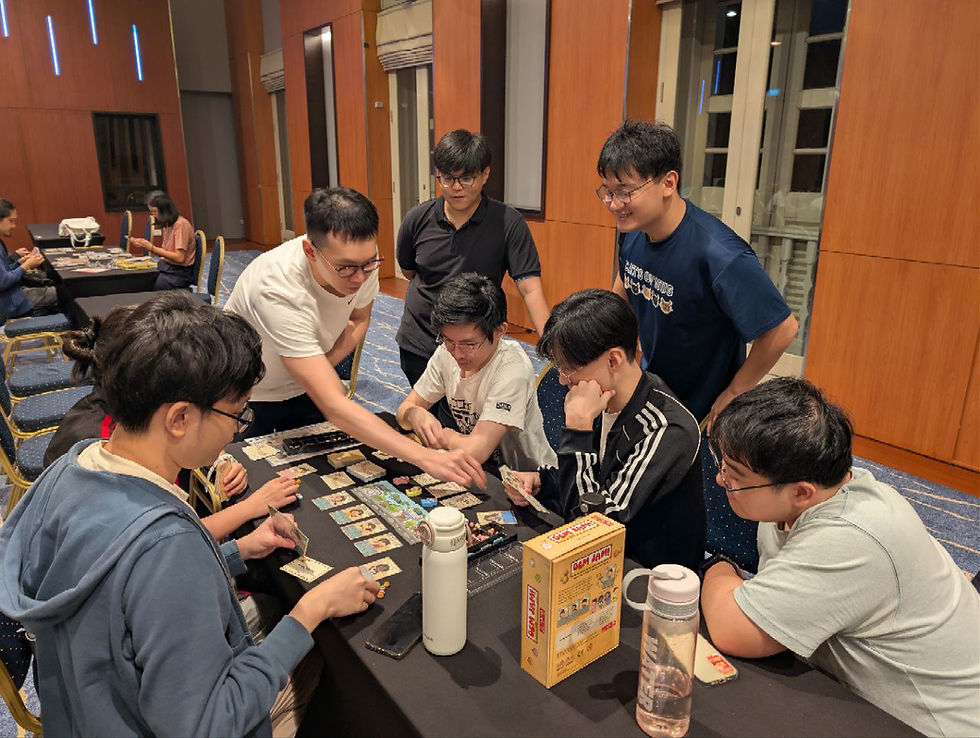
Marketing for me did not start with ads; it started with showing up. Long before I had a design, I was just a regular at board game meetups, making friends and learning the craft. When it came time to test my early prototypes, which were honestly quite rough, those same friends were the ones who sat down to help me refine them.
By the time we launched at the Asian Board Game Festival (ABGF 2025), our marketing 'strategy' was already in motion. It was not about a sales pitch; it was about the community. Seeing those familiar faces show up to support us and champion the game to strangers was incredible. I have realized that in this industry, the best way to market your product is to genuinely market yourself: build real friendships, stay active in the community, and never stop playing.
Q: Any memorable stories, funny experiences or motivating events stories you would like to share throughout your entire experience of designing Gem Jam?
A truly standout moment for me was watching a group of strangers go from total silence to loud laughter within just three rounds of Gem Jam. It was incredible to see the 'sharing' mechanic inspired by passing snacks in school turn a table of strangers into a group of friends.
Seeing my game create those genuine human connections is the ultimate reward, it is what keeps me motivated through the long, iterative hours of game design.
Q. Do you have any advice for any aspiring tabletop board game creators?
Don't be precious with your ideas. The most dangerous thing an aspiring creator can do is get defensive during playtesting. Even if you love a mechanic, if it does not resonate with players, you need to be ready to 'kill your darlings.' Use every piece of criticism as a tool to build something better. Sometimes, the best thing you can do for your game is to throw away your favorite part and start fresh.
If I could travel back in time, I would tell myself to join the local board game scene much sooner, because those friendships are exactly what brought Gem Jam to life. I spent too much time worrying about my lack of 'official' experience, but I have learned that passion and a willingness to show up matter more than any credential.
If you love board games and you love the people at the table, the rest will follow. The community is your best teacher, your first playtesters, and eventually, your biggest advocates.

Q. Are there any future plans/new games in production for Gemini Games?
Absolutely! I have a few major concepts in the works that I am currently working on. But right now, my primary focus is a more compact, light-box game that explores some unique historical and mythological themes. I am currently in the testing phase and playing with some interesting new scoring mechanics. Stay tuned!
Q. Where can we find out more about Gemini Games?
To stay updated on our latest playtests and upcoming releases, come say "Hi" over at @geminigames.co on Instagram. And if you would like to bring the Gem Jam experience to your own table, copies are available now at the SBD online shop. Thanks for reading! We will see you at the next game night!